
You Cannot GEO Your Way Out of a Weak Website
Summary:
AI is changing how people search, but it hasn’t changed what makes a website worth citing. Before worrying about GEO, AEO, or AI-friendly formatting, make sure your website has the foundation AI platforms and search engines already rely on: crawlability, topical authority, helpful content, and trust.
Every few years, marketing gets a new acronym:
- SEO
- SXO
- AEO
- GEO
- AI SEO
If you’ve spent any time on LinkedIn lately, you’ve probably seen people talking about optimizing your website for ChatGPT, Claude, Google AI Overviews, and other AI-powered search experiences. Some recommend new writing frameworks while others swear by special formatting, entity optimization, or even adding an llms.txt file so AI platforms know exactly what to read.
There’s truth behind some of these recommendations. But I think we’re skipping an important part of the conversation. And here’s my “hot” take: Everyone is looking at the last 10% of the process while ignoring the first 90%.
How AI Is Changing SEO… and How It Isn’t
Let’s get one thing out of the way: AI is changing SEO.
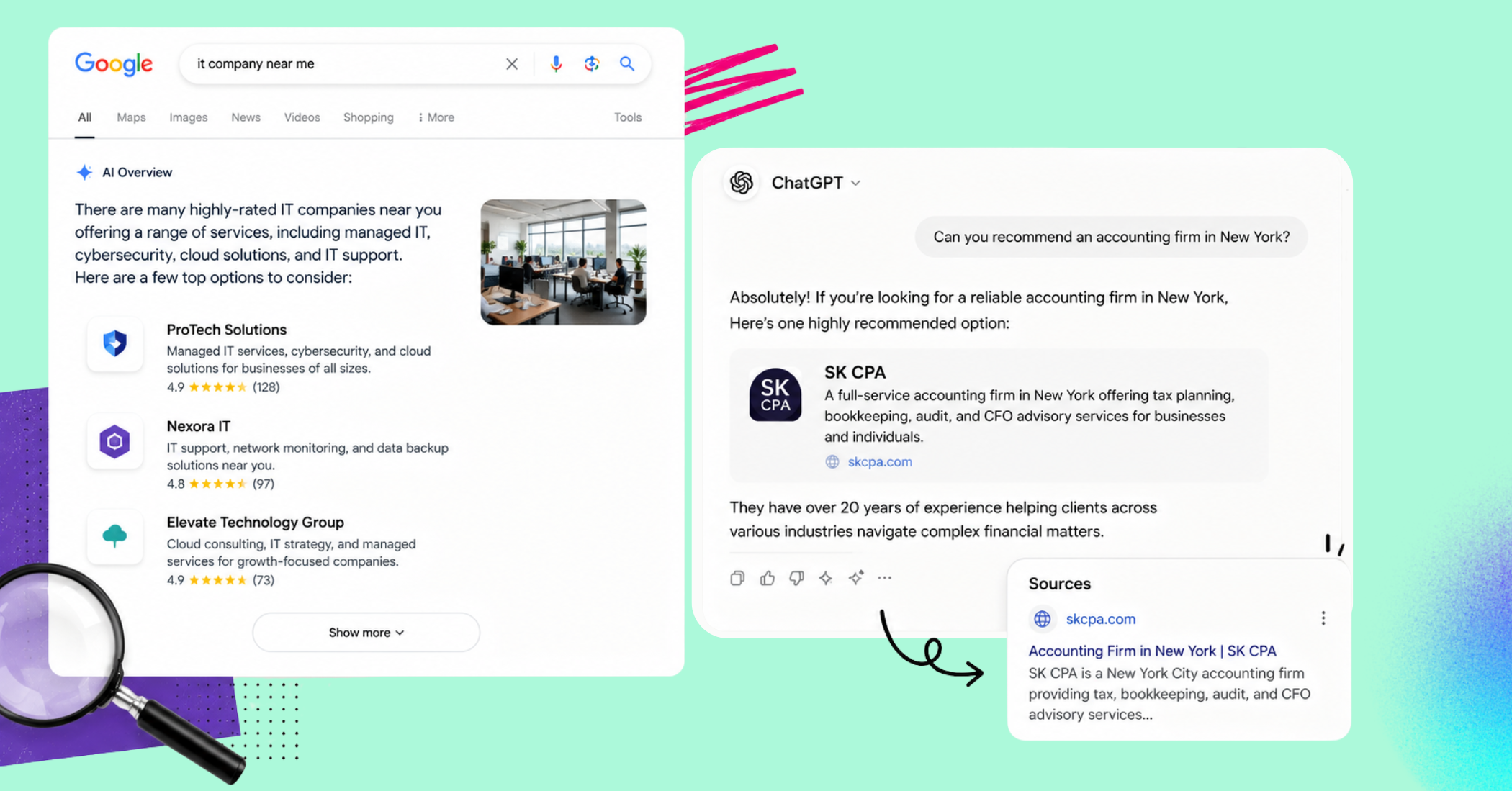
People are discovering brands through ChatGPT. Google AI Overviews are answering questions directly in search results. Businesses are wondering how to show up in these experiences instead of only chasing traditional rankings.
I can’t deny it, these are real changes. Where I disagree is the idea that AI search requires an entirely new playbook.
The way I see it, AI optimization is not replacing SEO; it’s building on it. Think about it this way: if your website struggles to demonstrate expertise, isn’t being indexed consistently, lacks topical authority, or doesn’t provide anything original, why would an AI platform suddenly decide it’s the best source to reference?
Being optimized for AI is not the same as being worth citing.
What AI Platforms Actually Need Before They Can Cite You
One of the biggest misconceptions surrounding AI SEO is that AI platforms work independently from everything we’ve learned about search over the last two decades. But in reality, they rely heavily on the same signals we’ve always known matter.
Google has made it clear that websites do not need special AI-specific optimization or markup to appear in AI-powered search experiences. Instead, the focus remains on creating helpful, reliable content that can be crawled, indexed, and understood.
OpenAI’s publisher guidance tells a similar story. Making your content accessible allows AI systems to discover it, but accessibility alone doesn’t guarantee your content will be selected or cited. That’s an important distinction; eligibility is not authority.
The GEO Foundation Everyone Keeps Skipping
When people ask me how to show up in AI Overviews or increase the chances of being cited by ChatGPT, I rarely start by talking about AI. Instead, I ask questions like these:
- Can search engines crawl your website?
- Are your pages actually being indexed?
- Have you built topical authority around the subjects you want to own?
- Does your content offer original insights, examples, or experience?
- Is your website technically healthy?
- Are related pages connected through meaningful internal links?
Those questions may not sound exciting, but they’re the reason some websites become trusted sources while others remain invisible.
Let’s Take a Look at the AI Visibility Pyramid
Most people don’t immediately call you.

I’m going to go backwards, and there’s a reason for it.
Level 6: AI Optimization (GEO/AEO)
Building a good SEO foundation, and therefore, AI visibility, takes time. I’m going to go backwards, and there’s a reason for it.
Level 5: Structured Data
Use structured data where it makes sense. It helps search engines understand your content, but it doesn’t replace quality.
Level 4: Helpful Content
Answer questions thoroughly. Add examples, experience, opinions, research, or insights that don’t exist everywhere else.
Level 3: Topical Authority
One article rarely establishes expertise. Publishing multiple high-quality pieces around a subject tells search engines and AI systems what your website is known for.
Level 2: Technical SEO
Fast pages, clean architecture, proper indexing, mobile usability, internal linking, and a healthy website all contribute to discoverability.
Level 1: Crawlability
Everything starts here. If search engines and AI crawlers can’t consistently discover and understand your content, nothing built above this layer matters.
Notice where GEO sits? At the top, not the bottom.
But What About llms.txt?
This is probably the question I hear most often: “Should I add an llms.txt file?”
If someone tells you that adding one will suddenly make ChatGPT cite your website, they’re oversimplifying how AI search works.
Could files like llms.txt become more useful as AI platforms evolve? Possibly. Should you ignore new technologies altogether? Absolutely not. But no text file can manufacture authority. No formatting trick can replace expertise. No prompt can compensate for a website that lacks trust, depth, or relevance. That’s like painting a house before pouring the foundation.
Before You Worry About GEO, Ask Yourself This
Use this checklist before investing time in AI-specific optimization.
- Can search engines crawl my website?
- Are my most important pages indexed?
- Have I built topical authority around my core services?
- Am I publishing original insights instead of repeating what everyone else says?
- Are related pages connected through meaningful internal links?
- Is my website technically healthy?
- Would someone trust this article even if AI didn't exist?
If several of those answers are “no,” GEO probably isn’t your biggest opportunity.
Will AI Replace SEO?
Honestly, I don’t think so. I think AI is raising the standard (and we’ve seen this happen with other marketing concepts as well).
The more useful question is not whether AI will replace SEO, but whether SEO is worth the investment based on how your business grows.
The websites that succeed won’t necessarily be the ones chasing every new acronym or optimization trend. They’ll be the ones consistently publishing useful, trustworthy content on websites that are technically sound and recognized for their expertise. That’s always been good SEO. The difference is that now, your audience isn’t just people.
It’s people and AI systems deciding which sources deserve to be surfaced.
In My Opinion, This Is What It Means for the Future of SEO
Five years from now, I don’t think we’ll be talking about SEO, GEO, AEO, and AI optimization as separate disciplines. We’ll simply call it SEO, as always. Because good SEO has never been about gaming an algorithm; it’s been about making your content discoverable, understandable, and trustworthy.
AI hasn’t changed that. It has simply raised the bar for what earns visibility.
So yes, pay attention to how AI is changing SEO, learn how AI platforms process information, and experiment with new formats and technologies. Just don’t mistake the finishing touches for the foundation. Because you cannot GEO your way out of a weak website.
See how this company now appears in AI results

Amy Perez
Founder of Fluentica
Amy is the founder of Fluentica, a digital marketing agency helping B2B businesses strengthen their visibility, messaging, and growth strategy. She has worked with clients building their SEO presence from the ground up, helping them create the technical, content, and authority foundations needed to become more discoverable in search and AI-generated results.
This article reflects Amy’s experience helping businesses understand that AI visibility does not begin with a few formatting changes. It is built on the same strong marketing and SEO foundations that make a business credible, useful, and easy to find.
Related Posts
- B2B marketing
- Brand Strategy
- Content Strategy
- Digital Marketing
- Marketing Strategy
- News
- SEO Strategy
- SMB Marketing
- Back
- AI Optimization